Behind the Work
When a raise leaves you worse off
For a lot of Vermont families, earning more money can mean ending up with less. Green Mountain United Way and Working Bridges asked us to help more people understand why, and to build the will to change it.
It is called the benefits cliff. Picture a single parent in Vermont earning $19 an hour. At that wage they qualify for a child care subsidy, Dr. Dynasaur health coverage for their kids, and 3SquaresVT food benefits. A raise to $22 adds about $6,000 a year, but it also crosses the income limit on the child care subsidy. The subsidy does not shrink as earnings rise; it ends. Full-time care for two children in Vermont runs past $20,000 a year, so losing it costs far more than the raise pays. The parent earns more and takes home less.
It is a widespread trap, and an invisible one to anyone who has never hit it. In Barre, as of 2018, 55% of single mothers raising children were living below the federal poverty line.
To help people see how the cliff works, we built a card game with Working Bridges and Green Mountain United Way. A table of players takes on the life of one person facing a real opportunity, a raise or a better job. Twenty minutes of play stands in for a month of that person’s life, and the whole table plays as them together. The task is to line up enough support, enough bridges, to reach the opportunity without falling off the cliff. The bridges are real supports, the kind an employer can actually provide: a food pantry in the break room, a gas gift card, flexible hours, help covering a licensing fee. At the end, the team talks through whether it was enough, and what they think the person chose. It does not recreate what families live, but it makes the trade-off concrete enough for a room to reckon with together.

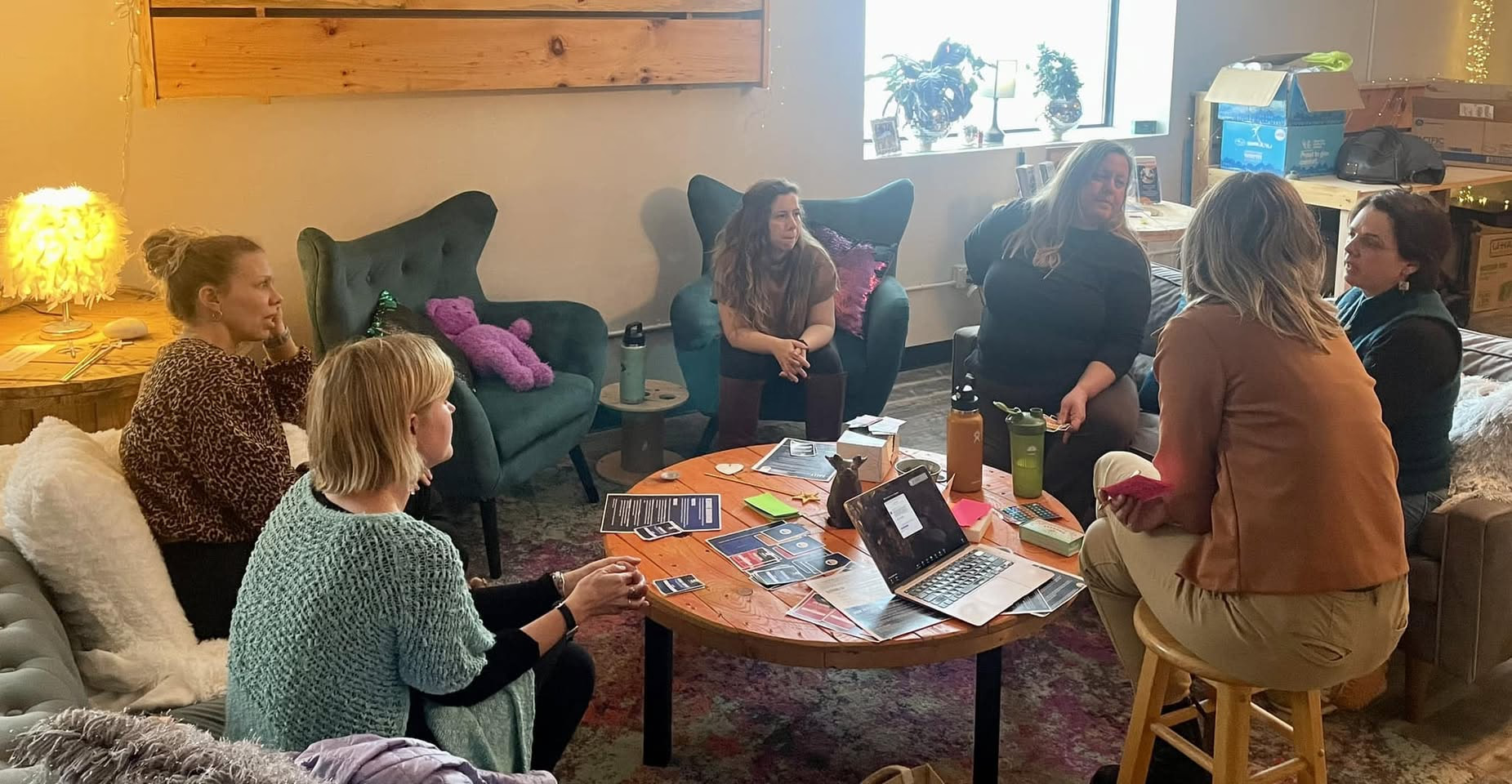
Fig. 1. From the benefits cliff project.
Every rule comes from real experience rather than guesswork, grounded with the people closest to the problem. We tested it the same way, playing it with partners and stakeholders and reshaping it whenever a round showed a better version.
01 · Why a game
Two things tend to happen at that table. Employers stop reading a turned-down promotion as a lack of drive, and start seeing the cliff math behind it. And because the supports in the game are things they could put in place on Monday, people leave with a short list of changes worth making, low-cost moves that can keep a worker from having to turn down a raise. That was the brief: not to explain the cliff, but to send the people who can change it home with something to do.
The game is in workplaces now, putting the cliff in front of the people who could flatten it.